Bullied at school and ignored and abused at home by his indifferent mother and older brother, Billy Casper, a 15-year-old working-class Yorkshire boy, tames and trains his pet kestrel falcon whom he names Kes. Helped and encouraged by his English teacher and his fellow students, Billy finally finds a positive purpose to his unhappy existence.
| Tagline | They beat him. They deprived him. They ridiculed him. They broke his heart. But they couldn’t break his spirit. |
| Release Date: | Apr 03, 1970 |
| Genres: | Drama |
| Production Company: | Woodfall Film Productions, Kestrel Films |
| Production Countries: | United Kingdom |
| Casts: | David Bradley, Freddie Fletcher, Lynne Perrie, Colin Welland, Brian Glover, Bob Bowes, Bernard Atha, Laurence Bould, Joey Kaye, Ted Carroll, Robert Naylor |
| Status: | Released |
| Budget: | $0 |
| Revenue: | 0 |
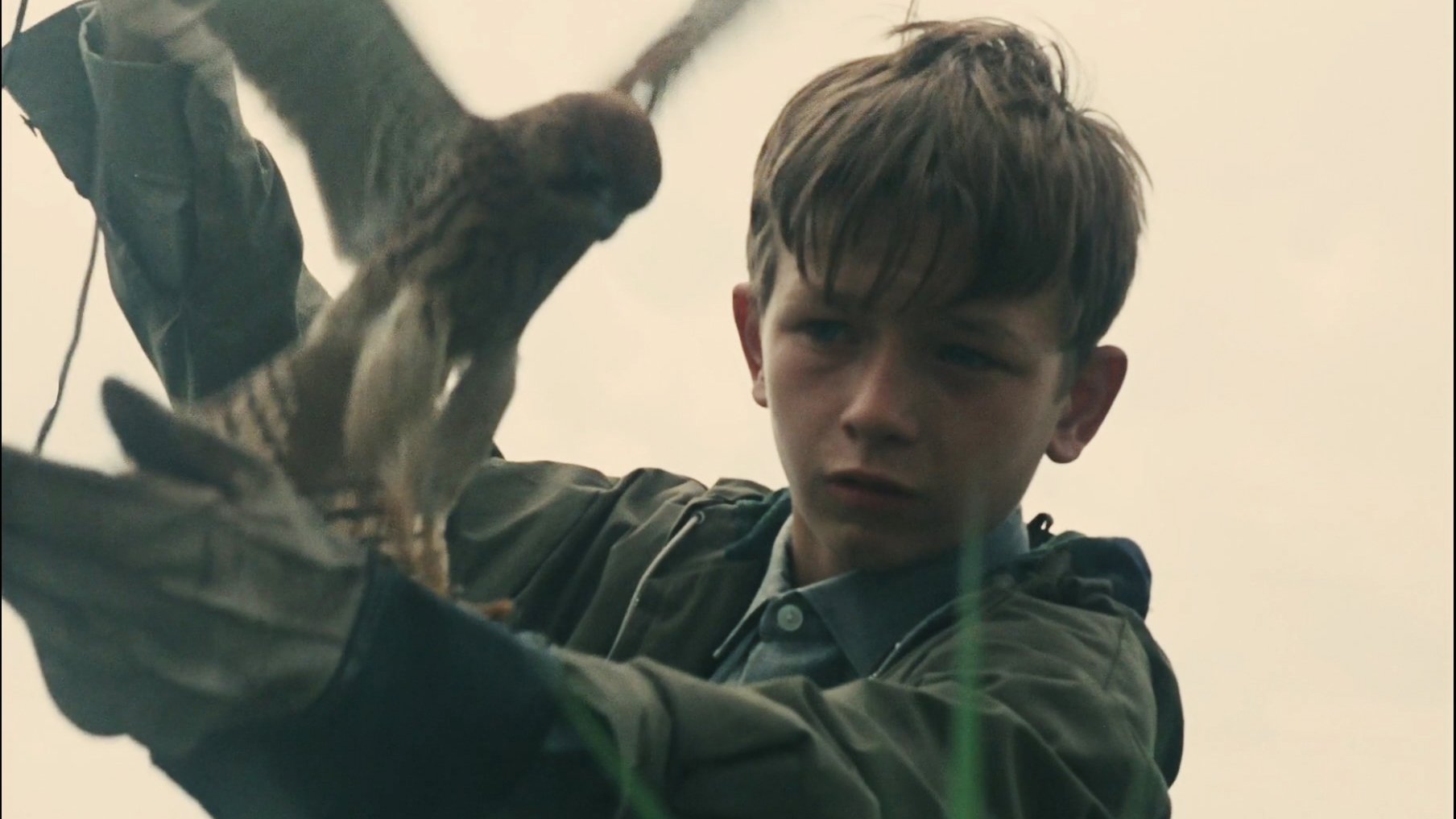
When I think back to my childhood, this is one of the few films that I ever saw that induced some sort of emotional reaction. It was it's last five minutes that achieved that, but building up to this denouement we watch the antics of the amiable working class lad "Billy" (David Bradley). He lives with his mum (Lynne Perrie) and his older, bullying, brother "Jud" (Freddie Fletcher) on a bit of a shoestring and is largely a loner at school. Then one afternoon he espies a young kestrel nesting in a farmer's tree. He convinces the man to allow him to try and rear the bird and so with the help of a second hand book, some meat scraps and some enthusiasm from his supportive teacher "Mr. Farthing" (Colin Welland) we watch the boy finally discover a purpose for his life. Indeed, it might also be the first time he has ever experienced love in his life. He doesn't have a pet, though. Each time he takes his bird for a flight, he fully expects it to take off into the skies and never return - but it doesn't. It returns to his arm when called and this only serves to further cement a relationship that is rapidly becoming all-consuming for "Billy". Bradley is excellent here, no other word for it. His characterisation is mischievous, cheeky and vulnerable and as his association with his kestrel grows we are delivered of an engagingly convincing performance that stands out strongly. There is also a strong sense of community imbued here by Ken Loach and by writer Barry Hines of life in a northern English town where the mines are still the main employer; the boozer the main source of recreation; where family lives were anything but conformist and where education was as much to do with a cane as it was a book. In many ways this pitches concepts of nature and nurture successfully and it isn't afraid to create humour from the scenarios it portrays via some intimate photography and some honest dialogue. This is one of my favourite British films and is well worth a watch.

